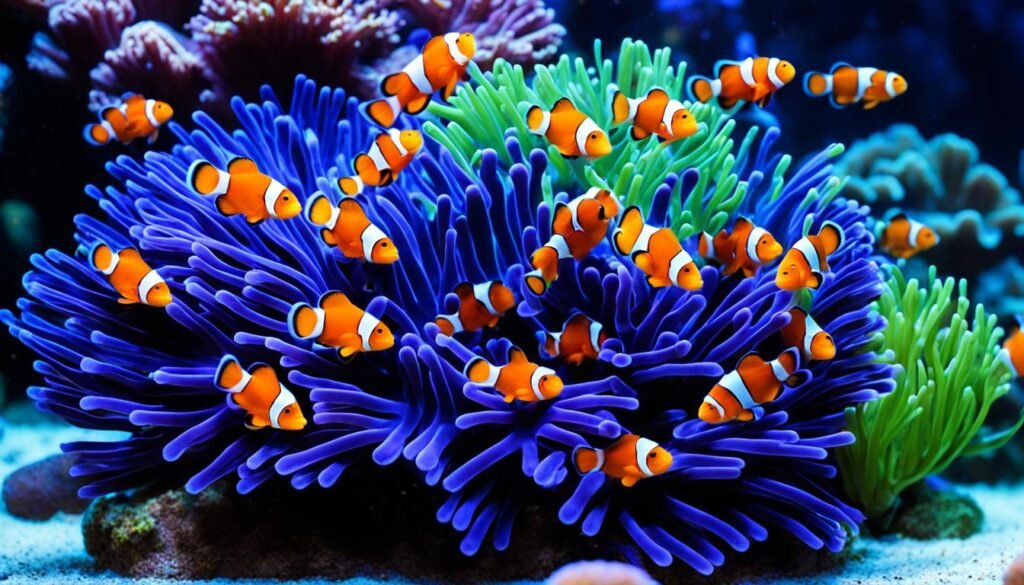
When you picture a clownfish, chances are a vibrant orange fish with crisp white stripes, perhaps peeking out from a waving anemone, immediately comes to mind. This iconic image, thanks to popular culture, has cemented the clownfish's place as one of the ocean's most recognizable and beloved residents. But the world of Clownfish Species & Characteristics is far more diverse and fascinating than a single animated character suggests. From subtle shifts in color and patterning to remarkable adaptations and intricate social structures, these captivating creatures offer a kaleidoscope of unique traits that make them a constant source of wonder for both scientists and aquarists alike.
Ready to dive deeper than the reef���s surface? Let's explore the remarkable lives and varied features of these enchanting fish.
Clownfish at a Glance
- Diverse Family: Over 30 distinct species, primarily within the Amphiprion genus.
- Iconic Appearance: Recognized by white bars on backgrounds ranging from orange, red, and yellow to brown and black.
- Unique Habitat: Found in warm, tropical Indo-Pacific waters, exclusively on coral reefs, living symbiotically with sea anemones.
- Social Structure: Live in size-based hierarchies, led by a dominant breeding female.
- Gender Fluidity: All clownfish are born male (protandrous hermaphrodites); the breeding male changes sex to female if the dominant female is lost.
- Long-Lived: Can live over 20 years, with some species reaching up to 30 years in ideal conditions.
- Aquarium Favorites: Highly popular in the home aquarium trade, with captive-bred specimens offering a sustainable choice.
- Conservation Concerns: Wild populations face threats from climate change (anemone bleaching, ocean acidification) and over-collection.
Beyond Nemo: What Are Clownfish, Really?
More formally known as anemonefishes, these saltwater beauties belong to the subfamily Amphiprioninae, part of the larger Pomacentridae family – better known as damselfishes. They're true inhabitants of the vibrant, warm, tropical Indo-Pacific waters, making their homes primarily amidst the rich biodiversity of coral reefs. You'll spot them almost immediately by their signature white vertical bars, starkly contrasting against a body that can be red, orange, yellow, brown, or even deep black.
While their cheerful demeanor and striking patterns make them seem approachable, clownfish are incredibly specialized creatures. Their survival strategy revolves around a breathtaking partnership with one of the ocean's most formidable stinging predators: the sea anemone. This unique bond is just one piece of the puzzle that makes understanding clownfish so rewarding.
A Rainbow of Diversity: Exploring Clownfish Species & Characteristics
The world of clownfish is surprisingly expansive, encompassing over 30 distinct species. For years, most were neatly tucked into the genus Amphiprion, while the Maroon clownfish (Premnas biaculeatus) held its own in the genus Premnas. However, the scientific community recently reclassified the Maroon clownfish into Amphiprion, consolidating the family. It's a dynamic field, with new discoveries, like the Polynesian anemonefish (A. maohiensis) classified in 2025, continually adding to our knowledge of these fascinating fish.
Each species, while sharing core clownfish traits, boasts its own set of characteristics – from subtle variations in stripe count and color intensity to differences in size, temperament, and even preferred anemone hosts. Some are "generalists," happily cohabiting with multiple anemone species, while others are "specialists," forming exclusive bonds with just one or two. The vertical bar patterns, a hallmark of their appearance, aren't just for show either; they likely serve as camouflage, a warning coloration linked to anemone toxicity, and even as a way for clownfish to recognize members of their own species.
Spotlight on Popular Species & Their Unique Traits
When it comes to choosing a clownfish for an aquarium, a few species consistently rise to the top of the list, each offering its own charm and set of care requirements.
The Classic Ocellaris Clownfish
This is the "Nemo fish." Known scientifically as Amphiprion ocellaris, the Ocellaris clownfish is beloved for its classic bright orange body with three distinct white vertical bars, often outlined in black. These hardy and relatively small fish, typically reaching about 3-4 inches, are an excellent choice for beginner aquarists. Their peaceful nature and adaptability have also made them a favorite for developing the stunning "designer morphs" we'll discuss shortly.
Pink Skunk Clownfish
A smaller, more subdued beauty, the Pink Skunk Clownfish (Amphiprion perideraion) lives up to its name with a delicate peachy-pink body and a single, thin white stripe running along its back, from nose to tail. Reaching about 3 inches, they are among the most peaceful clownfish species, making them ideal for tranquil community tanks. Their gentle disposition is often reflected in their choice of host anemone, typically preferring more docile species.
Clark's Anemonefish
The Clark's Anemonefish (Amphiprion clarkii) is a true chameleon of the clownfish world. Its coloration is incredibly variable, ranging from bright yellow to deep orange, brown, or even black, often with a yellow tail and two or three white vertical bars. This species is celebrated for its hardiness and adaptability, making it a "generalist" that can comfortably host in all ten known sea anemone species. They grow larger than Ocellaris, typically 5 inches, and can be more assertive, requiring a larger tank.
Sebae Clownfish
Young Sebae Clownfish (Amphiprion sebae) present a bold, almost graphic appearance with a stark black body and two wide white bars, often featuring a vibrant yellow or orange snout and belly. As they mature, the black often lightens to a dark brown or reddish hue, and the yellow/orange extends further across their body. Growing to 5-6 inches, they are larger and can be quite territorial, making them better suited for experienced aquarists with adequately sized tanks. Their specific needs, especially for a suitable host, demand careful planning.
Maroon Clownfish
Distinguished by a prominent spine on each cheek – a characteristic that once placed them in their own genus, Premnas – the Maroon Clownfish (Amphiprion frenatus or Amphiprion bicinctus for specific species, but Amphiprion biaculeatus is the commonly recognized one for the 'Maroon') is a bold and often aggressive species. They typically sport a deep, rich maroon body with one to three white or yellow stripes, though some display striking gold bars. These are the giants of the clownfish world, often exceeding 6 inches, and their territorial nature means they are best kept singly or as a well-established pair in larger, species-specific tanks.
The Art of Creation: Understanding Designer Clownfish Morphs
Beyond the wild types, selective breeding has given rise to a stunning array of "designer morphs." These are not separate species but rather captive-bred variations, prized for their unique and often exaggerated color patterns. They offer aquarists a chance to own truly one-of-a-kind fish, often with enhanced hardiness due to generations of captive breeding.
- Picasso Ocellaris: Known for their abstract, irregular white markings that spread beyond the standard bars, creating a mosaic-like pattern.
- Snowflake Ocellaris: Features extensive white markings that resemble snowflakes, often merging to cover a significant portion of the body.
- Black Ice Ocellaris: A captivating morph that combines the Snowflake pattern with a reduced orange coloration, resulting in a dramatic, almost black-and-white fish.
- Wyoming White Ocellaris: These are predominantly white clownfish with minimal orange, sometimes just a faint wash, creating an elegant, ghostly appearance.
- Lightning Maroon Clownfish: A truly spectacular Maroon clownfish morph, showcasing intricate, jagged white patterns that branch across its deep maroon body like streaks of lightning.
These designer morphs highlight the incredible genetic plasticity of clownfish and the dedication of breeders to push the boundaries of their aesthetic appeal.
The Unbreakable Bond: Clownfish and Anemones
Perhaps the most famous characteristic of clownfish is their extraordinary partnership with sea anemones. This isn't just a casual acquaintanceship; it's a textbook example of mutualistic symbiosis, where both partners benefit profoundly.
For the clownfish, the anemone's stinging tentacles offer an impenetrable fortress against predators. How do they manage this? Clownfish secrete a special protective mucus coating over their bodies, which prevents the anemone's nematocysts (stinging cells) from firing. It's a clever biological trick, effectively making them invisible to the anemone's defense system.
But the benefits flow both ways. The clownfish, in return, acts as a vigilant guardian, protecting its host from anemone-eating fish. They also perform essential cleaning duties, removing parasites and debris from the anemone's tentacles. By fanning their fins, they help increase oxygen flow around the anemone, and their waste products contribute beneficial microorganisms to the host. Of the thousands of sea anemone species, only about ten are known to host clownfish, showcasing the specificity of this remarkable relationship. Dive deeper into the fascinating relationship between clownfish and their anemone hosts, the very aspect that earned them the nickname 'Nemo fish'.
Life on the Reef: Social Dynamics, Reproduction, and Longevity
Beyond their stunning looks and symbiotic partnerships, clownfish exhibit a fascinating social structure and reproductive strategy that makes them truly unique.
A Matriarchal Society
Clownfish live in small groups within their host anemone, and their society is strictly hierarchical, based on size. At the top sits the largest, most dominant individual: the breeding female. She's the undisputed leader, setting the tone for the entire group. Below her is the slightly smaller breeding male, her mate. The remaining individuals in the anemone are typically smaller, non-breeding males, patiently awaiting their turn in the pecking order. This strict hierarchy ensures stability and prevents destructive competition within the limited confines of their anemone home.
Born Male, Die Female: Protandrous Hermaphroditism
One of the most mind-bending aspects of clownfish biology is their unique reproductive strategy: they are protandrous sequential hermaphrodites. This means that all clownfish are born male. The incredible part is what happens if the dominant female of a group is lost – perhaps to a predator or old age. When this happens, the breeding male, the next in line, undergoes a remarkable transformation. He changes sex, developing into a female, and takes over the leadership role. Then, the largest of the non-breeding males will mature into the new breeding male. It's a seamless system that ensures the continuity of the breeding pair and the group's survival.
Family Life
Clownfish are substrate spawners, meaning the female lays her eggs on a solid surface, usually a carefully cleaned rock near the base of their host anemone. A prolific breeder, a female can lay anywhere from a few hundred to a thousand tiny (3-4 mm long) eggs in a single clutch. Once laid, the male takes over, diligently fertilizing the eggs and then guarding them for the next 6-7 days until they hatch. He'll fan them to keep them oxygenated and meticulously clean them of any debris or fungal growth.
Upon hatching, the minuscule clownfish larvae enter a pelagic stage, drifting in the open ocean currents for up to 12 days. This pelagic dispersal is crucial for genetic mixing and helps new populations colonize distant reefs; for instance, Oman anemonefish larvae have been known to travel over 400 km during this stage. After this journey, they settle as juveniles, embarking on the perilous quest to find their own anemone host and establish a new home.
Remarkable Lifespans
Given the dangers of reef life, clownfish are surprisingly long-lived. In the wild, they can comfortably live for over 20 years. Some particularly robust orange clownfish (likely Ocellaris or Percula) have even been estimated to reach an impressive 30 years in protected environments. This longevity underscores their resilience and the success of their symbiotic lifestyle.
Bringing the Reef Home: Caring for Clownfish in Your Aquarium
The vibrant colors, engaging personalities, and manageable size of many clownfish species make them perennial favorites for marine aquarists. However, bringing these fish into your home comes with a responsibility to understand and meet their specific needs.
Essential Tank Requirements for All Species
While specific species have nuanced demands, certain fundamental requirements apply across the board to ensure your clownfish thrive.
- Tank Size: This is crucial. For smaller, more peaceful species like the Ocellaris or Pink Skunk clownfish, a 20-30 gallon tank can be a suitable starting point for a single fish or a pair. However, larger or more aggressive species, such as the Maroon clownfish, require significantly more space – 50 gallons or more – to prevent territorial disputes.
- Water Parameters: Stability is key in a marine aquarium.
- Salinity: 1.020-1.025 Specific Gravity (SG)
- pH: 8.1-8.4
- Alkalinity: 8-12 dKH
- Temperature: 72-82°F (around 78°F is often ideal)
- Ammonia & Nitrite: 0 ppm (Absolutely essential – these are toxic)
- Nitrate: Below 20 ppm (Lower is always better)
- Quality filtration is non-negotiable to maintain these parameters. A robust system including mechanical, biological, and chemical filtration (like activated carbon) is necessary.
- Lighting: Clownfish don't have stringent lighting requirements themselves, but if you plan to keep a host anemone or corals, you'll need strong, appropriate lighting for 10-14 hours daily.
- Diet: Clownfish are omnivorous. In captivity, provide a varied diet of high-quality marine flake food, pellets, and frozen foods like mysis shrimp, brine shrimp, and spirulina-enriched preparations. Feed small amounts 2-3 times a day.
- Host Anemones: While iconic, host anemones are optional in an aquarium. Clownfish can live perfectly healthy lives without one, sometimes hosting in corals or even powerheads! If you choose to add an anemone, research its specific care needs and ensure your tank is mature and stable enough to support it. Remember that specific clownfish species have preferences for certain anemone hosts.
- Health Management: Always quarantine new fish in a separate tank for several weeks before introducing them to your main display. This allows you to observe for disease, treat if necessary, and reduce stress on your existing tank inhabitants. Monitor your clownfish's behavior, maintain impeccable water quality, and provide a nutritious diet to keep them healthy.
Choosing Your Clownfish: Matching Species to Your Experience and Tank
Selecting the right clownfish involves more than just aesthetics. Consider:
- Experience Level: Beginners should start with Ocellaris or Pink Skunks. More aggressive or demanding species like Maroons or Sebaes are best left to experienced hobbyists.
- Tank Size: Be honest about your tank's capacity. A pair of Maroon clownfish will quickly outgrow a smaller tank and become excessively aggressive.
- Tank Mates: Clownfish can be territorial, especially as they grow. Research compatibility with other fish species in your tank to avoid conflict.
- Host Anemone Goals: If an anemone is a must-have, ensure you can meet its demanding care requirements and choose an anemone compatible with your desired clownfish species.
Breeding Clownfish: A Rewarding Challenge
For dedicated aquarists, breeding clownfish can be an incredibly rewarding experience. It requires significant commitment and specialized equipment, but the joy of watching fry develop is unparalleled. An optimal environment for reproduction involves stable temperatures (typically 78-82°F), proper lighting to simulate natural cycles, and a conditioning diet rich in protein and varied nutrients for the breeding pair. The male will meticulously prepare a nesting site, often a flat rock or terracotta pot, which the female then uses to lay her eggs. He then fertilizes them and dutifully guards and tends to them until they hatch. Raising the microscopic larvae is the most challenging aspect, demanding meticulous attention to water quality, specialized live foods, and careful handling.
Protecting Their Future: Wild Clownfish and Conservation
The popularity of clownfish in the aquarium trade has a complex relationship with their wild populations. Between 1997 and 2002, the Ocellaris clownfish was the most traded marine fish globally, a testament to their widespread appeal.
The Aquarium Trade's Double Edge
While the trade brings these beautiful fish into homes, wild collection, particularly from biodiverse regions like the Philippines and Indonesia, has led to significant population declines in some areas. Studies have shown an 80% decrease in density in parts of the Philippines due to over-collection. This highlights the importance of responsible sourcing.
Why Captive-Bred Matters
Choosing captive-bred specimens offers substantial advantages over wild-caught fish. Not only does it support sustainability by reducing pressure on wild populations, but captive-bred clownfish are often hardier, more accustomed to aquarium life, and less likely to carry diseases. This also contributes to the genetic diversity of the captive population, reducing the need to extract more from the wild.
Major Threats to Wild Populations
Beyond collection for the aquarium trade, wild clownfish populations face existential threats from global environmental changes:
- Global Warming & Anemone Bleaching: Ocean warming, a direct consequence of global warming, is considered the single greatest threat. Rising temperatures cause sea anemones to expel the symbiotic algae living within their tissues, leading to "bleaching" and often death. Without their host anemones, clownfish lose their essential shelter and protection, leaving them vulnerable to predators. The 1997-98 El Niño event, for example, led to the extirpation of pink skunk clownfish populations in parts of Japan due to widespread anemone bleaching.
- Ocean Acidification: As the ocean absorbs more carbon dioxide, its pH decreases, leading to ocean acidification. This has a detrimental impact on larval clownfish, impairing their crucial sense of smell and hearing. These senses are vital for them to find suitable reefs and, critically, their host anemones, dramatically increasing their risk of predation and reducing their survival rates.
- Coastal Development: Human coastal development directly impacts coral reef ecosystems, destroying critical habitats and increasing pollution, which further stresses clownfish and their anemone hosts.
Despite these threats, there is hope. Marine protected areas (MPAs) have shown to be highly effective, benefiting clownfish by prohibiting collecting and safeguarding biodiversity hotspots, allowing populations to recover and thrive.
Your Next Steps: A Responsible Aquarist's Action Plan
If the diverse characteristics and fascinating lives of clownfish have inspired you to consider welcoming them into your home aquarium, here’s how to do it responsibly and successfully:
- Assess Your Setup: Before anything else, objectively evaluate your existing or planned aquarium. Does it meet the minimum tank size requirements for the clownfish species you're interested in? Can you consistently maintain the necessary water parameters and filtration?
- Research Thoroughly: Don't rely solely on basic guides. Delve into specific care sheets for your chosen clownfish species (e.g., Ocellaris vs. Maroon) and any potential host anemones. Understand their temperament, full grown size, and compatibility with other fish you intend to keep.
- Source Quality Fish: Make the ethical and practical choice: always purchase captive-bred specimens from reputable local fish stores or online dealers. Inquire about their health guarantee and the source of their fish. This supports sustainability and often leads to healthier, hardier fish.
- Prepare Properly: Set up a dedicated quarantine tank before introducing new fish to your main display. Gather all appropriate foods, test kits, and care supplies in advance. Patience during the setup and acclimation phase will pay dividends in the long run.
- Plan for Growth: Remember that even small clownfish grow! Consider their long-term space requirements and the potential for a pair to form and breed, even if breeding isn't your initial goal. Responsible planning ensures a happy, healthy home for your clownfish for years to come.
By understanding the incredible Clownfish Species & Characteristics and committing to responsible care, you can enjoy these charismatic fish while also contributing to their conservation for future generations.